ANCIENT EGYPT
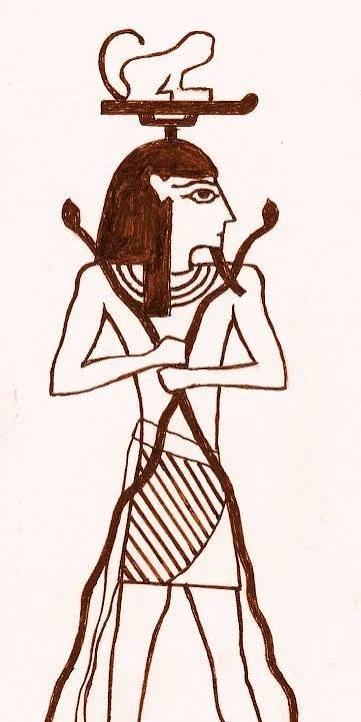
Heka & the power woven through the world
When we look back at ancient Egypt, it can be tempting to separate “religion” from “magic” — as though there were ordinary religious practices on one side and secret magical practices on the other.
For the ancient Egyptians, the distinction was not always so clear.
One of the words we translate as magic is heka. But heka was much bigger than what we might imagine when we hear the word magic today. It was understood as a powerful force woven into creation and the natural order of the world.
Magic could be part of healing, protection, childbirth, religious ceremony, the royal court, and preparation for death. It was not necessarily something hidden away from everyday life.
Words Had Power
The Egyptians understood words, names, images, and symbols as having power.
A spoken formula could be used as part of a healing or protective practice. An image of a deity could represent more than a picture. A written inscription could carry the power of what it described.
This is one reason Egyptian magic was so closely connected to writing and symbolism.
Amulets were another important part of everyday magical practice. People wore or carried objects believed to provide protection, health, or good fortune. The material, shape, image, and inscription could all contribute to an amulet's meaning.
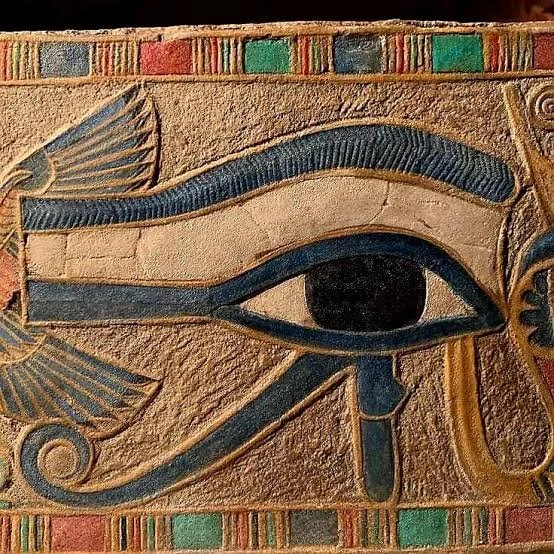
The Eye of Horus, for example, became a powerful symbol associated with protection and restoration.
Isis, Horus & Sacred Knowledge
The stories of the Egyptian gods were not simply stories. They were part of the spiritual world people lived within.
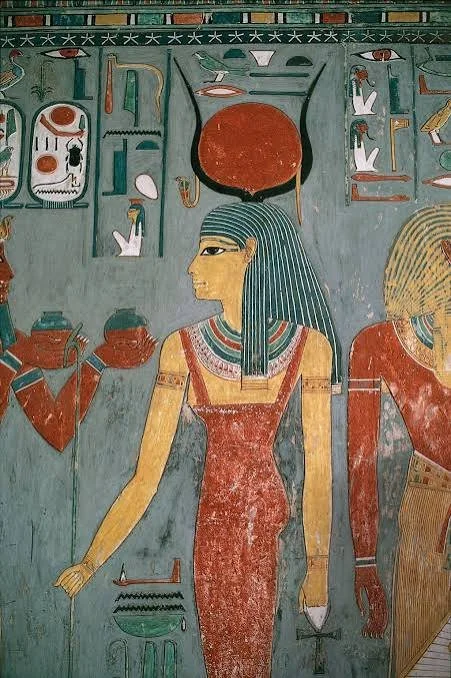
Isis was associated with motherhood, protection, healing, and powerful knowledge. In the story of Isis and Osiris, she uses knowledge, devotion, and magical power to restore what has been broken and protect her son Horus.
Thoth, associated with writing, wisdom, the moon, and knowledge, was also connected with magical knowledge.
These stories give us an early glimpse of something we will return to throughout Magic School:
Knowledge itself can be a form of power.
Magic & Cosmic Order
There was another important idea in Egyptian thought: Ma'at.
Ma'at represented truth, balance, harmony, justice, and the proper order of the universe.
This is important because Egyptian magic wasn't simply about getting whatever you wanted. Heka existed within a larger cosmic order.
There was a relationship between the individual, the gods, nature, society, and the universe.
That idea will become important as we build our own magical practice.
Magic is not simply:
How do I get what I want?
It can also be:
How do I live in relationship with the world around me?
A Thought to Carry Forward
The ancient Egyptians remind us that magic can live in words, symbols, objects, stories, intention, and relationship.
You don't have to believe exactly what an ancient Egyptian believed to learn from the way they approached the world.
They paid attention.
They gave meaning to ordinary objects.
They understood that what we say, what we focus on, and what we carry with us can change how we experience the world.
And that is where our own magical practice begins.
THINGS TO KNOW
Heka is often translated as “magic,” but it was a broader concept of sacred power.
Magic and religion were deeply intertwined in ancient Egyptian life.
Words, names, symbols, and objects were understood to have power.
Amulets were commonly used for protection and well-being.
Ma'at represented balance, truth, harmony, and cosmic order.
A MOMENT TO CONSIDER
What objects, words, or symbols already hold meaning for you?
Where do you notice the relationship between intention and your everyday life?
EXPLORE FURTHER
Look at an ancient Egyptian amulet or protective inscription. Notice what symbols were chosen and ask yourself what story or quality each one represents.
Magic begins with attention.