ANCIENT GREECE
Oracles, crossroads & the language of the gods
The ancient Greek world gives us another beautiful way of understanding magic: through relationship with the unknown.
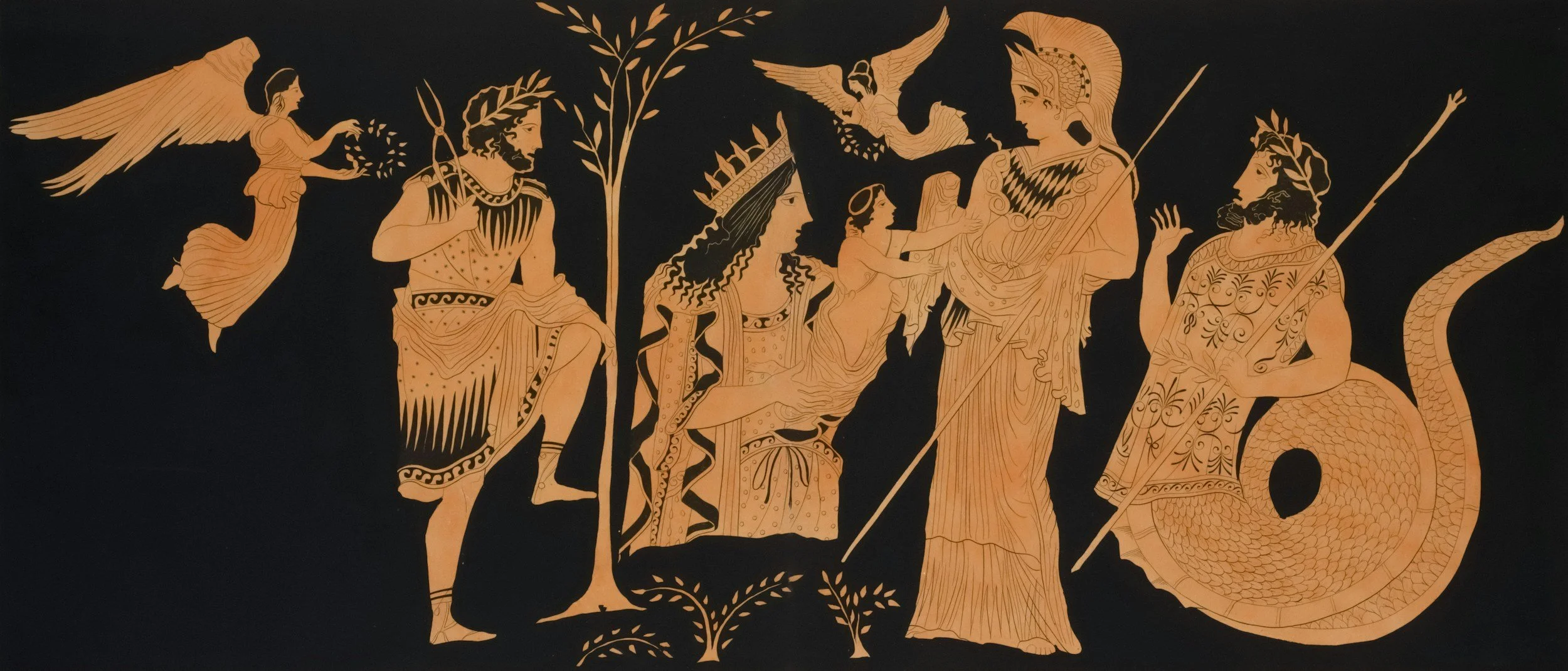
The Greeks lived in a world filled with gods and goddesses, each connected with different parts of life.
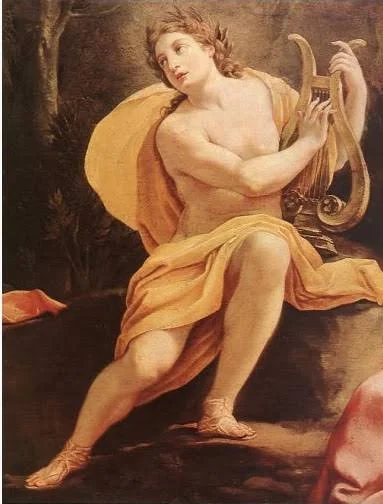
Apollo was associated with prophecy and healing. Athena with wisdom. Aphrodite with love. Artemis with the wild and the hunt. Hermes with travel, communication, and boundaries.
The gods weren't distant figures existing only inside myths. Religious practice was woven into homes, cities, festivals, journeys, agriculture, family life, and important decisions.
Listening for Guidance
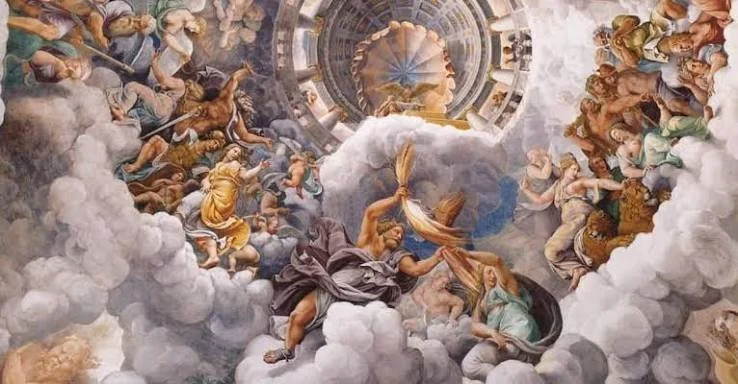
One of the most fascinating parts of Greek spirituality was divination — the practice of seeking information or guidance about something unknown.
People looked to dreams, signs in nature, birds, celestial events, offerings, lots, and oracles.
The most famous was the Oracle of Delphi, a sanctuary dedicated to Apollo.
People traveled to Delphi with questions about matters ranging from personal decisions to politics and war. The priestess known as the Pythia delivered prophetic responses associated with Apollo.
What interests me most isn't simply the idea of predicting the future.
It is the willingness to ask a question and listen for an answer.
That is something we will eventually explore through tarot and oracle cards.
Hecate & the Crossroads
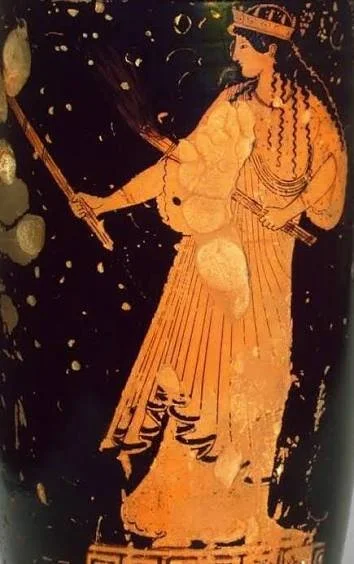
Another figure who will become important in our journey is Hecate.
Her associations changed over time, but she became strongly connected with crossroads, night, torches, boundaries, and transitions.
The crossroads is a powerful magical image.
You are between places.
You have choices.
You cannot see the entire road ahead.
And yet you still have to choose a direction.
This is part of what makes crossroads such an enduring symbol in magical traditions.
Persephone & Transformation
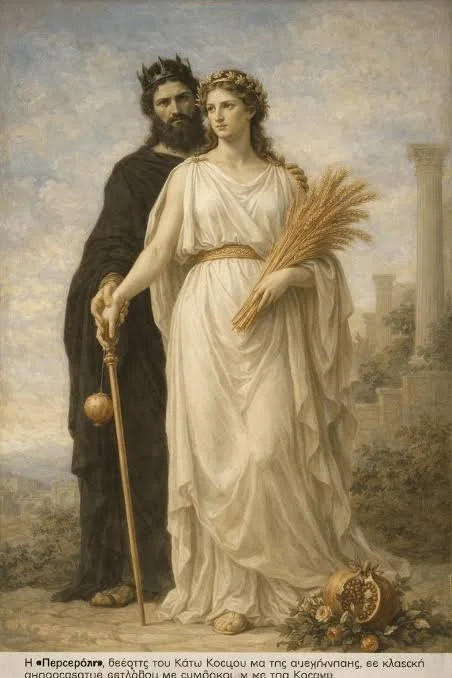
The story of Persephone also gives us a powerful image of transformation.
Her journey between the world above and the underworld became connected with themes of death, return, seasons, change, and the movement between worlds.
We don't have to treat these stories as literal instructions.
We can also approach them as symbolic language.
The underworld can represent what we are not yet ready to see.
The return can represent what grows after a period of darkness.
The descent can represent transformation.
The Greek Approach
Ancient Greek spirituality reminds us that humans have always wanted to understand what cannot be fully known.
They watched the sky.
They listened to dreams.
They visited sacred places.
They asked questions.
They looked for patterns.
And sometimes, they simply sat with uncertainty.
That last part matters.
Divination doesn't have to mean knowing exactly what will happen.
It can be a way of creating a conversation with the unknown.
That is one of the ideas we will carry with us into our own practice.
THINGS TO KNOW
Ancient Greek religion was deeply woven into everyday life.
Divination was used to seek guidance about the unknown.
Delphi was one of the ancient world's most important prophetic sanctuaries.
Hecate became associated with crossroads, boundaries, night, and transition.
Greek mythology gives us symbolic language for transformation, choice, death, and rebirth.
A MOMENT TO CONSIDER
Where in your life are you standing at a crossroads?
If you could ask the unknown one question, what would it be?
EXPLORE FURTHER
Look at an image of the Temple of Apollo at Delphi or explore the story of Persephone. Notice which symbols or images you're naturally drawn toward.
Sometimes magic begins with asking a better question.