ANCIENT ROME
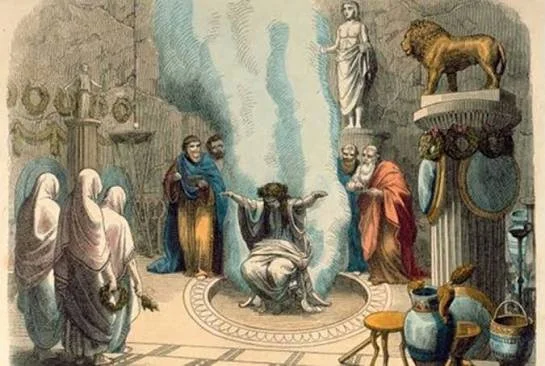
Omens, stars & everyday magic
The Romans inherited many ideas from the cultures around them, including Greece, but they developed their own traditions and practices.
Religion was deeply connected to Roman public life, family life, politics, and the relationship between humans and the gods.
And just as in Greece, people wanted to understand what the gods, nature, and the heavens might be telling them.
Reading the Signs
The Romans practiced several forms of divination.
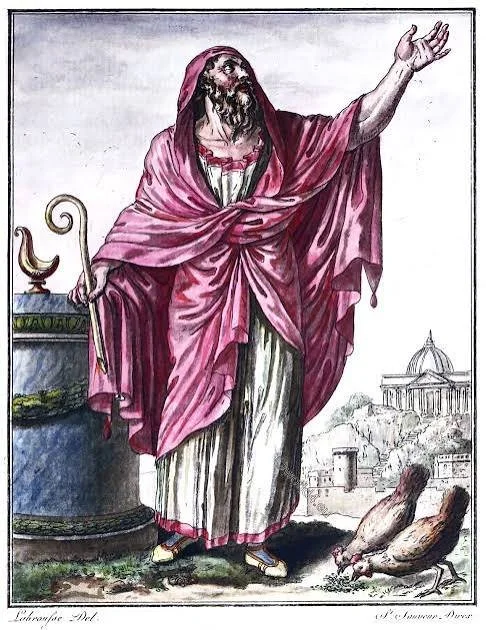
One was augury, which involved observing birds and other signs to help interpret whether an action had divine approval.
Another tradition involved haruspices, specialists who examined the organs of sacrificed animals for signs.
There were also prophetic texts, omens, dreams, astrology, and other forms of divination.
To modern eyes, some of these practices may seem very different from tarot or oracle cards.
But underneath them is a familiar human impulse:
Something is happening. What might it mean?
Astrology & the Sky
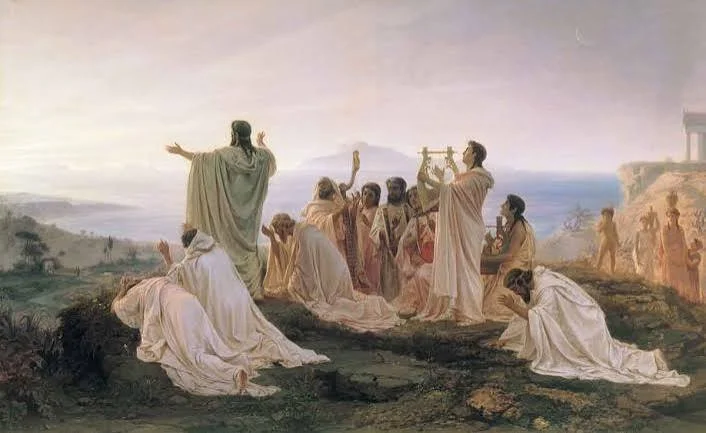
The ancient Mediterranean world inherited astronomical and astrological traditions that developed over many centuries.
The movement of the sun, moon, planets, and stars was observed carefully and interpreted as meaningful.
Astrology eventually became an important part of Roman intellectual and spiritual life.
The sky became a kind of language.
This is something we will return to when we study the moon.
Before modern clocks and calendars, the sky was also a practical way of understanding time and seasons.
The moon and stars weren't simply beautiful.
They helped people orient themselves within the world.
Magic in Everyday Life
Magic wasn't limited to temples or priests.
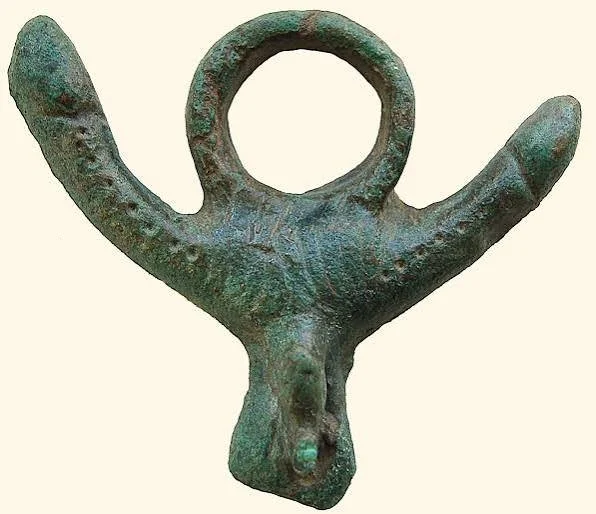
Ordinary Romans used charms, amulets, protective objects, written spells, and other practices.
Archaeologists have found objects and inscriptions connected with protection, healing, love, curses, and fortune-telling.
This is an important reminder:
Magic has never belonged only to one type of person.
People have always found small ways to create meaning, seek protection, influence circumstances, or feel connected to something larger than themselves.
A Complicated History
It is also important not to romanticize the ancient world.
Not every magical practice was peaceful or benevolent. Some surviving Roman magical objects include curses intended to harm or disadvantage another person.
That gives us an opportunity to begin thinking about ethics.
What do we want our practice to be used for?
What is ours to influence?
Where does another person's autonomy begin?
We will return to these questions later.
The Roman Lesson
The Romans remind us to look around.
Magic doesn't have to happen only during a formal ritual.
It can exist in the objects we carry, the way we mark time, the symbols we notice, and the questions we ask.
The ancient world was full of signs.
The practice was learning how to read them.
Our practice will also include learning when to notice, when to interpret, and when to simply let something be what it is.
THINGS TO KNOW
Romans practiced many forms of divination and ritual.
Omens and signs were part of religious and public life.
Astrology connected the movements of celestial bodies with meaning.
Amulets and magical objects were used in everyday life.
Ancient magic included both protective and harmful practices.
A MOMENT TO CONSIDER
What signs or patterns do you naturally notice in your own life?
How can you stay curious about them without assuming every coincidence has a message?
EXPLORE FURTHER
Look at an ancient Roman amulet or inscription. What was it created to protect, attract, or change?
Notice first. Interpret second.