Language of the Cards
Learning to read the symbols, understand the story, and listen to what the cards invite us to explore.
A Brief History of Tarot
Tarot is one of the most recognizable tools in modern magical practice, often used for reflection, spiritual exploration, and divination. Its history, however, began long before it became associated with the mystical.
The earliest known tarot cards appeared in 15th-century Europe, particularly in Italy, where they were created as playing cards for a game called tarocchi. These early decks were often beautifully illustrated and commissioned by wealthy families. They were not originally designed for fortune-telling.
By the late 18th century, tarot began to be connected with occult philosophy, esoteric symbolism, and divination. French occultists helped popularize the idea that the cards held deeper spiritual meanings and could be used as a tool for exploring hidden knowledge and the human experience.
During the 19th and early 20th centuries, tarot became increasingly connected to Western esoteric traditions. In 1909, artist Pamela Colman Smith illustrated the Rider-Waite-Smith deck under the direction of Arthur Edward Waite. Published in 1910, this deck became enormously influential because its Minor Arcana cards featured illustrated scenes rather than only arrangements of suit symbols.
Today, tarot is practiced in many different ways. Some people approach it spiritually, others psychologically or creatively, and many combine these perspectives. You do not have to subscribe to one particular belief system to begin learning the cards.
At its heart, tarot offers us a language of symbols through which we can explore our experiences, ask meaningful questions, and consider perspectives we might not have noticed otherwise.
Understanding the Tarot Deck
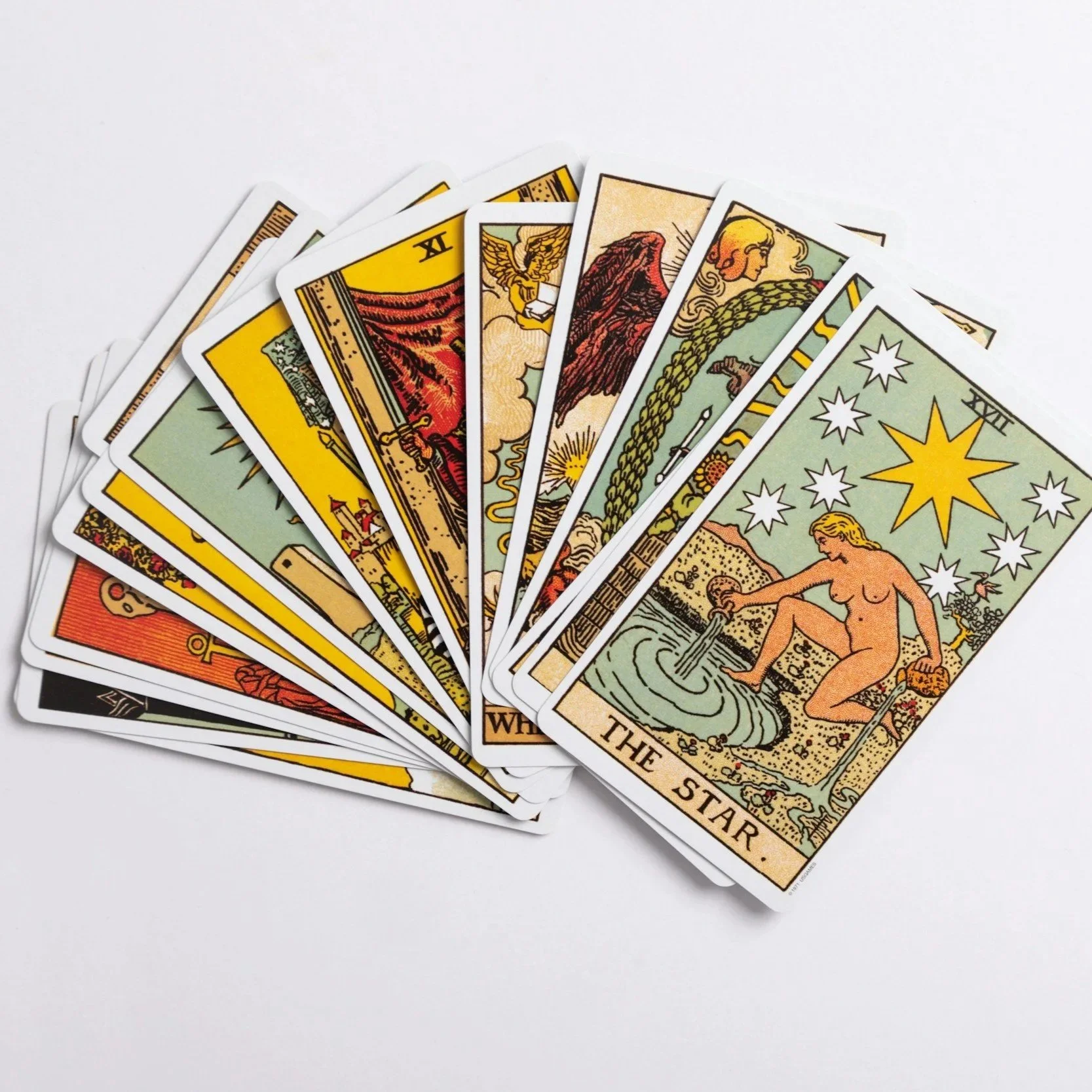
A traditional tarot deck contains 78 cards divided into two main groups: the Major Arcana and the Minor Arcana.
The word arcana comes from a Latin word associated with secrets or mysteries. Together, these two groups create a symbolic framework for exploring the larger themes of life and the smaller moments that shape our everyday experiences.
The Major Arcana: The Bigger Story
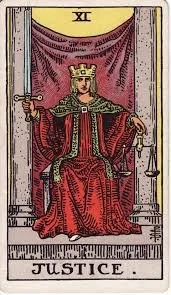
The Major Arcana consists of 22 cards, numbered from 0 to 21. These cards represent significant themes, turning points, lessons, and stages of personal development.
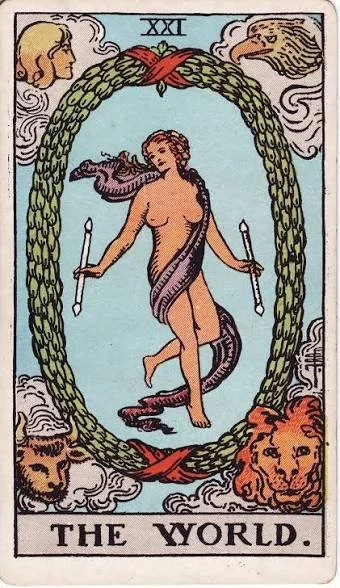
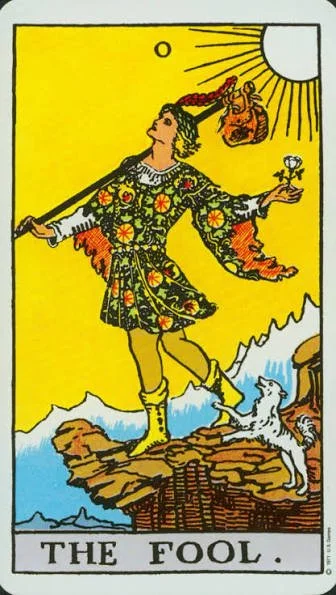
The journey begins with The Fool, numbered zero. The Fool represents beginnings, possibility, curiosity, and the willingness to step into the unknown. From there, the cards move through a series of archetypes and experiences, including learning, choice, change, upheaval, healing, and renewal, eventually arriving at The World, which represents completion, integration, and a sense of wholeness.
This progression is often called The Fool's Journey.
Imagine The Fool as the main character in a story. Along the way, they meet teachers, encounter challenges, experience love and loss, confront their own shadows, and discover new ways of understanding themselves and the world.
The journey is not necessarily linear. We revisit these themes throughout our lives. We may experience the energy of The Tower during a sudden change, The Hermit when we need solitude, or The Star when hope begins to return.
When several Major Arcana cards appear in a reading, they may invite you to consider a larger life theme or a meaningful period of transformation rather than focusing only on a temporary situation.
The 22 Major Arcana cards:
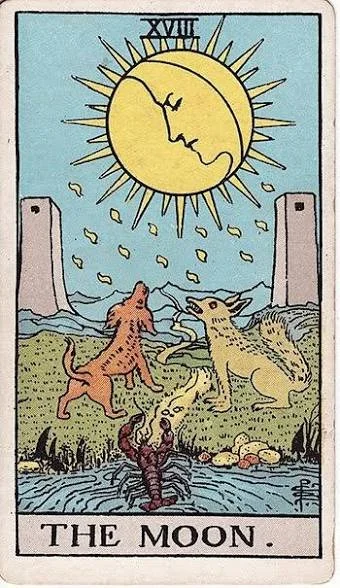
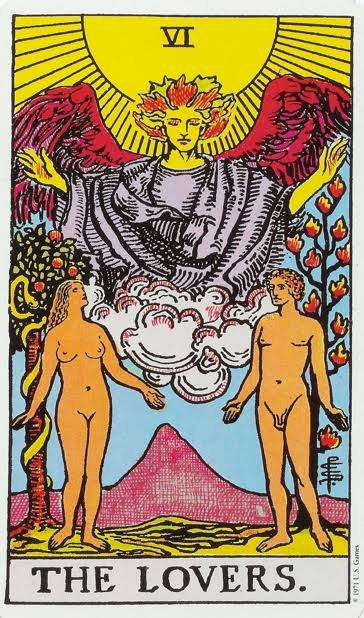
The Fool · The Magician · The High Priestess · The Empress · The Emperor · The Hierophant · The Lovers · The Chariot · Strength · The Hermit · Wheel of Fortune · Justice · The Hanged Man · Death · Temperance · The Devil · The Tower · The Star · The Moon · The Sun · Judgement · The World
Each card carries its own imagery, symbolism, and interpretations. As you learn them, allow yourself to become familiar with the pictures and the feelings they evoke instead of trying to memorize every meaning at once.
Remember, cards such as Death and The Tower do not automatically predict literal events. They often represent symbolic endings, disruption, revelation, and the possibility of change.
The Minor Arcana: The Everyday Story
If the Major Arcana represents the bigger chapters of our lives, the Minor Arcana represents the everyday moments that make up those chapters.
The Minor Arcana contains 56 cards divided into four suits: Wands, Cups, Swords, and Pentacles.
These cards explore our relationships, thoughts, ambitions, challenges, practical responsibilities, and emotional experiences. They can help us look more closely at how a larger theme is showing up in our daily lives.
Each suit contains ten numbered cards, from Ace through Ten, followed by four court cards: Page, Knight, Queen, and King.
The numbered cards often show a progression of energy within their suit, while the court cards can represent personalities, approaches, roles, or stages of developing a particular quality.
Let's explore the four suits.
-
Cups — Water
Emotions · Relationships · Intuition
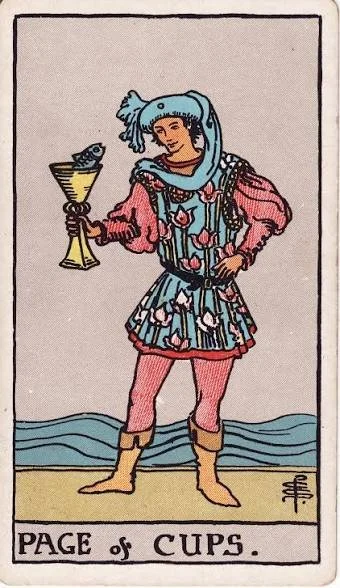
Cups are associated with Water and the inner world of feelings. They explore love, connection, compassion, imagination, intuition, and emotional growth.
An Ace of Cups may symbolize an opening of the heart, a new emotional beginning, or a renewed relationship with yourself. As the suit unfolds, it explores connection, celebration, disappointment, emotional choices, and the process of understanding our feelings.
Cups remind us that emotions are part of being human. They offer information about our experiences, but they also ask us to approach those experiences with awareness rather than allowing every feeling to make our decisions for us.
Cups ask us: What are you feeling? What needs care? How are you connecting with yourself and others?
-
Pentacles — Earth
Stability · Resources · Growth
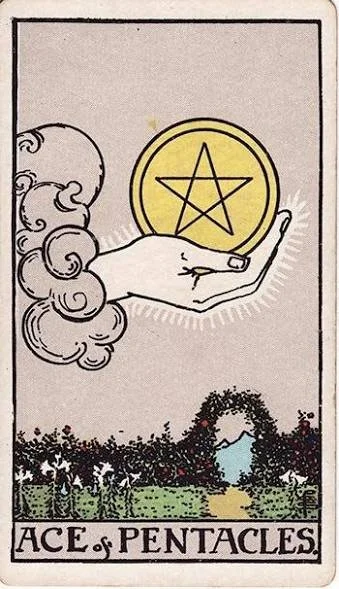
Pentacles are associated with Earth and the tangible parts of life: work, money, the body, home, resources, and the things we build over time.
An Ace of Pentacles might symbolize a practical opportunity, the beginning of a project, or the potential to create something lasting. As the suit progresses, it explores learning, effort, collaboration, responsibility, abundance, and the relationship between material security and personal fulfillment.
Pentacles remind us that growth often happens through consistent action. An intention becomes meaningful when we give it time, attention, and a place in the real world.
Pentacles ask us: What are you building? What needs tending? Where can you create greater stability?
-
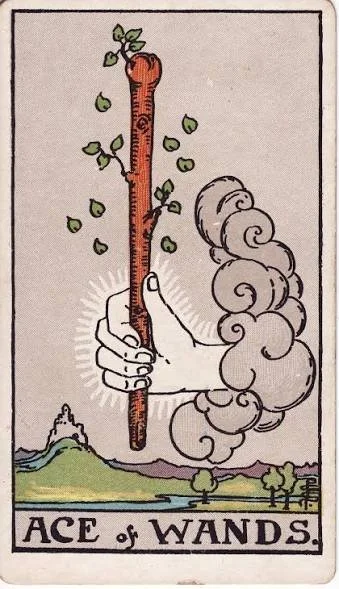
Wands — Fire
Passion · Creativity · Action
Wands are associated with the element of Fire. They represent inspiration, ambition, creativity, courage, and the energy that moves us toward something new.
An Ace of Wands might suggest a spark of inspiration or the beginning of a creative endeavor. As the suit progresses, we may encounter planning, effort, competition, growth, and the challenges of sustaining our enthusiasm.
By the later cards, the energy of Wands can explore the responsibilities and pressures that come with pursuing our goals.
Wands ask us: What lights you up? Where is your energy going? What are you ready to create?
-
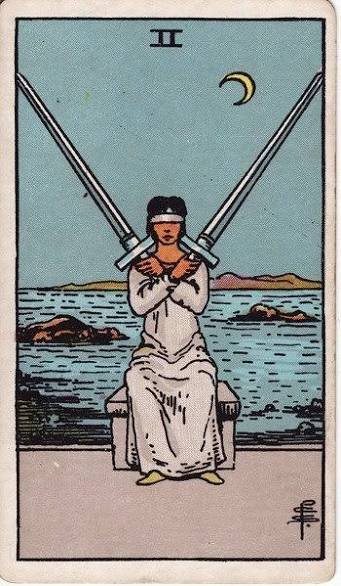
Swords — Air
Thoughts · Truth · Challenges
Swords are associated with Air, the element of thought, communication, ideas, and the mind.
This suit explores decisions, conflict, clarity, truth, worry, and the stories we tell ourselves. It can show us where our thinking helps us move forward and where our thoughts may be creating unnecessary struggle.
An Ace of Swords might represent a breakthrough in understanding, a new idea, or a moment of clarity. As the cards progress, we may encounter difficult decisions, disagreements, anxiety, and the need to face uncomfortable truths.
Swords are not simply negative cards. Clear thinking, honest communication, and the courage to see a situation as it is can be powerful forms of growth.
Swords ask us: What are you believing? What needs to be communicated? Is your mind helping you see clearly, or keeping you stuck?
How the Numbers Tell a Story
One of the most helpful ways to begin reading tarot is to notice that the numbered cards within each suit can be understood as a progression.
The imagery and interpretation of each individual card still matter, but the numbers provide a framework for recognizing how the story develops.
Here is one way to understand that progression:
Ace — The Beginning
The seed of possibility. A new opportunity, feeling, idea, or source of energy appears.
Two — The Choice
Duality, balance, partnership, or a decision begins to emerge. There may be two paths to consider.
Three — The Expansion
Something begins to develop. We see growth, collaboration, expression, or the first results of a beginning.
Four — The Foundation
Stability, structure, rest, or establishing a secure base. Something needs to be supported or maintained.
Five — The Challenge
Tension, conflict, disruption, or a shift that asks us to respond and adapt.
Six — The Adjustment
Movement toward harmony, healing, generosity, or a new perspective after a challenge.
Seven — The Test
Reflection, evaluation, patience, strategy, or a moment when we must decide how to move forward.
Eight — The Development
Momentum, practice, movement, or a deeper engagement with the situation.
Nine — The Culmination
A significant stage of development, approaching fulfillment, independence, or the realization of what has been built.
Ten — The Completion
The cycle reaches a culmination. Something has come full circle, bringing fulfillment, responsibility, transition, or the possibility of a new beginning.
These are broad themes, not rigid rules. A Five of Cups will tell a different story from a Five of Wands because each suit expresses its energy differently.
Think of the numbers as the structure of a story and the suits as the subject of that story.
The same stage of development can look very different when it involves emotions, thoughts, ambition, or material life.
The Court Cards: People, Personalities & Ways of Being
Each suit also contains four court cards: Page, Knight, Queen, and King.
These cards are sometimes the most confusing for beginners because they can represent actual people, but they can also describe an attitude, a way of responding, or a quality we are learning to embody.
Page — The Student
The Page represents curiosity, discovery, and the early stages of learning. This energy is open to possibility and willing to explore something new.
Knight — The Pursuer
The Knight represents movement and the active pursuit of something. Knights bring energy, motivation, and action, although their approach can sometimes become impulsive or unbalanced.
Queen — The Inner Mastery
The Queen represents a more developed, receptive, and embodied relationship with the suit's energy. She understands how to nurture, sustain, and express that quality.
King — The Outer Mastery
The King represents leadership, responsibility, and the ability to direct the suit's energy with intention. He brings structure and mature expression to what has been learned.
These are symbolic roles rather than fixed descriptions of gender. Any court card can reflect qualities within ourselves, regardless of gender or identity.
For example, the Queen of Cups may invite us to approach a situation with compassion and emotional awareness, while the King of Swords may encourage us to use clear judgment and thoughtful communication.
When a court card appears, ask yourself whether it might represent someone in your life, a quality you need to develop, or a particular way of approaching the situation.
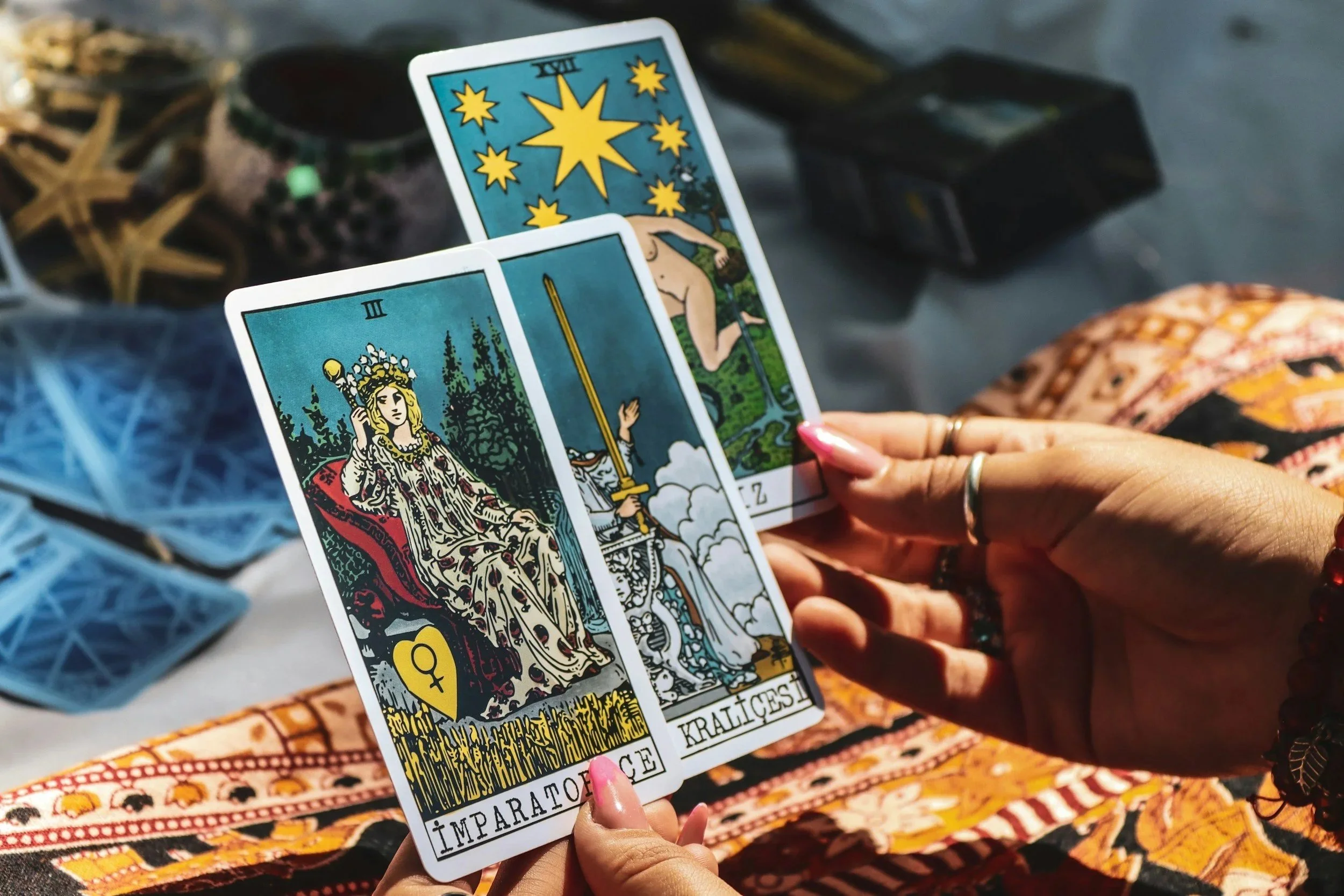
Reading Tarot as a Story
Tarot becomes much more interesting when we move beyond looking up individual card meanings and begin to see how the cards interact.
Think of a reading as a story with characters, themes, challenges, and possibilities. Each card adds another layer of meaning, and the relationship between the cards can be just as important as the cards themselves.
Imagine a reading that includes:
The Fool — an invitation to begin something new.
Three of Pentacles — learning, collaboration, and building a foundation.
Eight of Pentacles — dedication, practice, and developing a skill.
Together, these cards might tell a story about starting a new path, learning from others, and becoming more confident through consistent effort.
Notice that the cards do not need to predict a fixed future. Instead, they can help us recognize the energy of a situation and consider how we might participate in what comes next.
When reading several cards, consider these questions:
What themes or symbols appear more than once?
Are the cards showing beginnings, challenges, development, or completion?
Do the suits suggest a focus on emotions, thoughts, creativity, or practical matters?
How does each card change or deepen the meaning of the card beside it?
What story emerges when you look at the cards together?
You do not need to interpret every detail perfectly. Begin with what you notice, then explore the traditional meanings to deepen your understanding.
Working with Tarot in Your Own Practice
You do not need to own an elaborate deck or know all 78 cards to begin working with tarot.
Choose a deck whose artwork draws you in. Spend time looking at the images and noticing what catches your attention. Many beginners start with the Rider-Waite-Smith tradition or a deck inspired by it because the illustrated Minor Arcana offers many visual clues.
Try pulling a single card each morning. Before looking up its meaning, observe the imagery and ask yourself what it brings to mind. Then read the guidebook and consider how its traditional interpretation relates to your own observations.
You might ask:
What energy would be helpful for me to understand today?
What perspective am I not considering?
What can I learn from the situation I am navigating?
Write down the card, your initial impressions, and any thoughts that arise. Over time, your journal can become a record of how you develop your relationship with the cards.
Remember that tarot is a tool for reflection, not a replacement for your own judgment. You remain responsible for your choices, and you are always allowed to interpret a card thoughtfully rather than accepting a reading as an unquestionable truth.
The goal is not to become someone who can predict everything. It is to become more comfortable sitting with questions, recognizing patterns, and exploring the many ways a situation might unfold.
Reflection
Before moving on, consider these questions:
Which suit feels most familiar to you right now: Wands, Cups, Swords, or Pentacles?
Which Major Arcana card catches your attention, and what might it represent in your life?
How does viewing the cards as a story change the way you understand tarot?
What question would you like to explore through a one-card reading?
You do not have to master the deck all at once. Let your relationship with tarot develop through curiosity, observation, and practice.
The cards offer symbols. Your experience gives them context. Your discernment helps you decide what to do with what you discover.